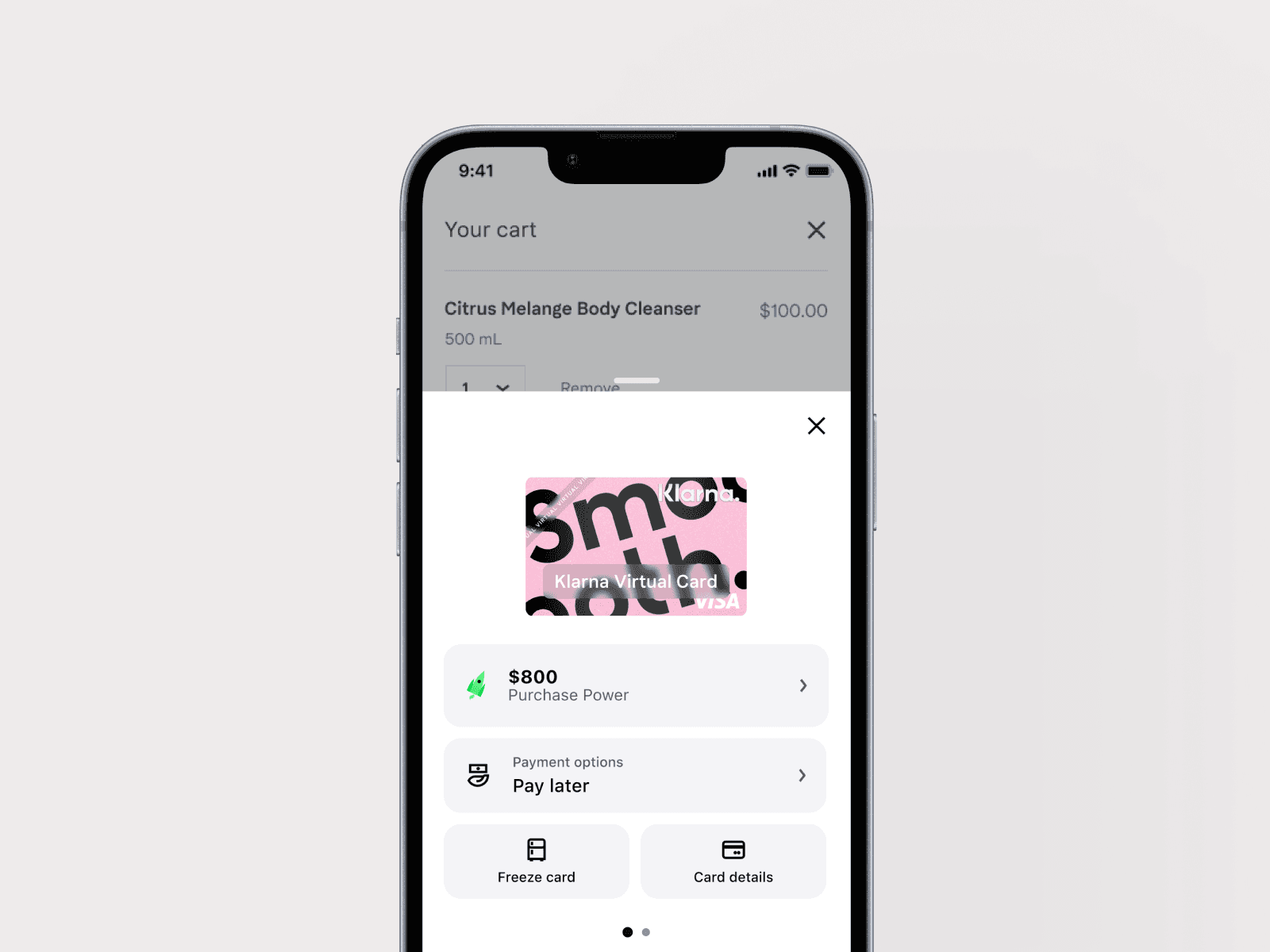
Klarna has always excelled within its merchant network, but the experience felt fragmented when users shopped elsewhere. At the time, users had to generate a unique virtual card for every single purchase, manually copying and pasting details into checkout fields. My mission was to bridge this gap, transforming a repetitive, high-friction task into a fluid, persistent payment experience that lived wherever the user shopped.
Balancing Speed and Security
Through our research, we identified a tension between two distinct user mindsets. Most users craved speed and continuity for their everyday purchases, while others preferred the added security of single-use cards.
Instead of forcing one behavior, I advocated for a dual-path strategy:
The Persistent Card: A "one-time setup" card that users could reuse across any merchant, strengthening their sense of ownership.
The Single-Use Option: Maintaining the high-security "burnable" card for users who wanted an extra layer of protection for specific purchases.
By supporting both, we ensured the product adapted to the user’s mental state without adding unnecessary complexity.
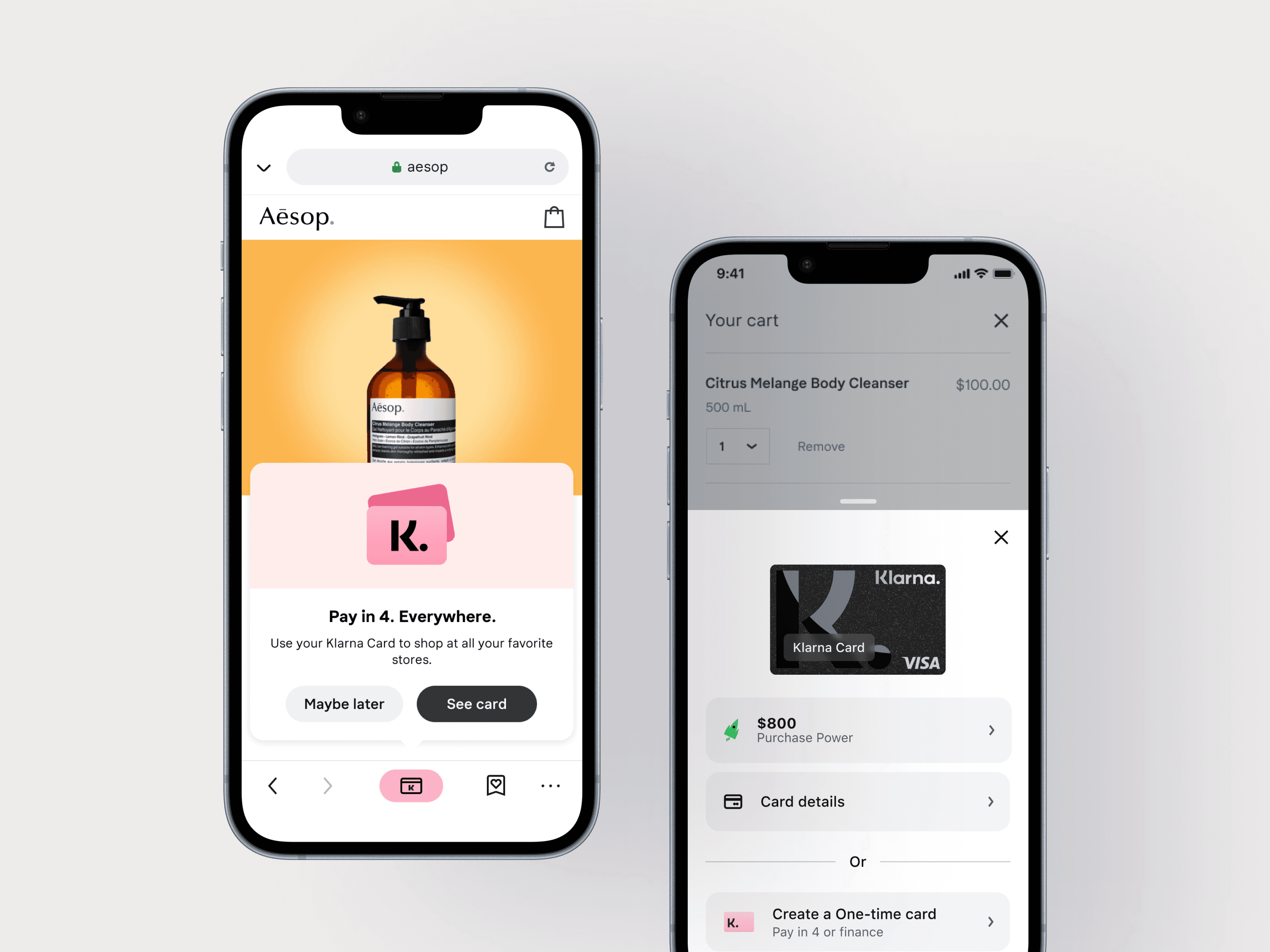
I focused on creating a payment system that felt like a natural extension of the in-APP browser:
Smart Payment Keyboard: I designed a contextual keyboard that automatically surfaced the Klarna Card during checkout. This turned a multi-step "copy-paste" ordeal into a single-tap action.
In-Browser Autofill: We developed a logic where the app could detect checkout fields and fill them instantly, removing the manual labor of data entry while keeping the user in their shopping flow.
Real-Time Transparency: To build trust, I prioritized visibility. Users could manage their cards and see transactions in real-time, ensuring that "fast" never felt "unsafe."
As a Senior Product Designer, I was responsible for defining the end-to-end patterns across both the Klarna app and browser. I worked closely with engineering to map out how the "Autofill" logic would behave across thousands of different merchant websites.
This phase involved:
Interaction Prototyping: Creating high-fidelity flows to test the transition between the browser and the payment layer.
Edge-Case Mapping: Defining how the system should react when a merchant didn't follow standard checkout conventions.
Stakeholder Alignment: Presenting these behavioral insights to leadership to prove that a persistent card would increase Klarna’s "top-of-wallet" status.
Integrated In-App Browser
Users could browse, select, and pay without breaking flow. The Klarna Card became accessible directly within the shopping journey, eliminating the need to manually copy card details between apps.
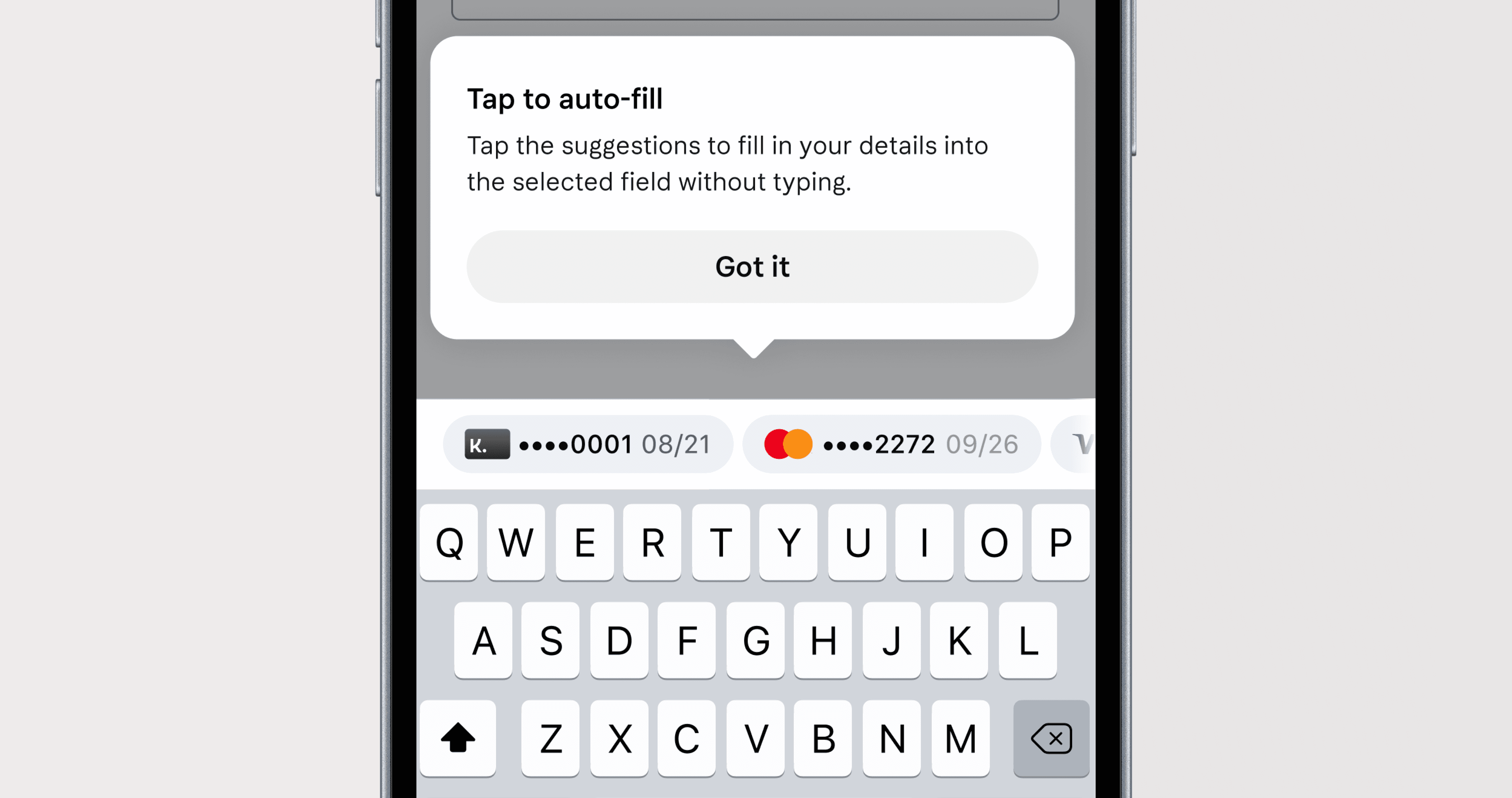
Smart payment keyboard
We introduced a contextual keyboard that automatically applies the Klarna Card number at checkout. It also allows users to securely store and select other cards, making Klarna a flexible payment layer rather than a single-option tool.
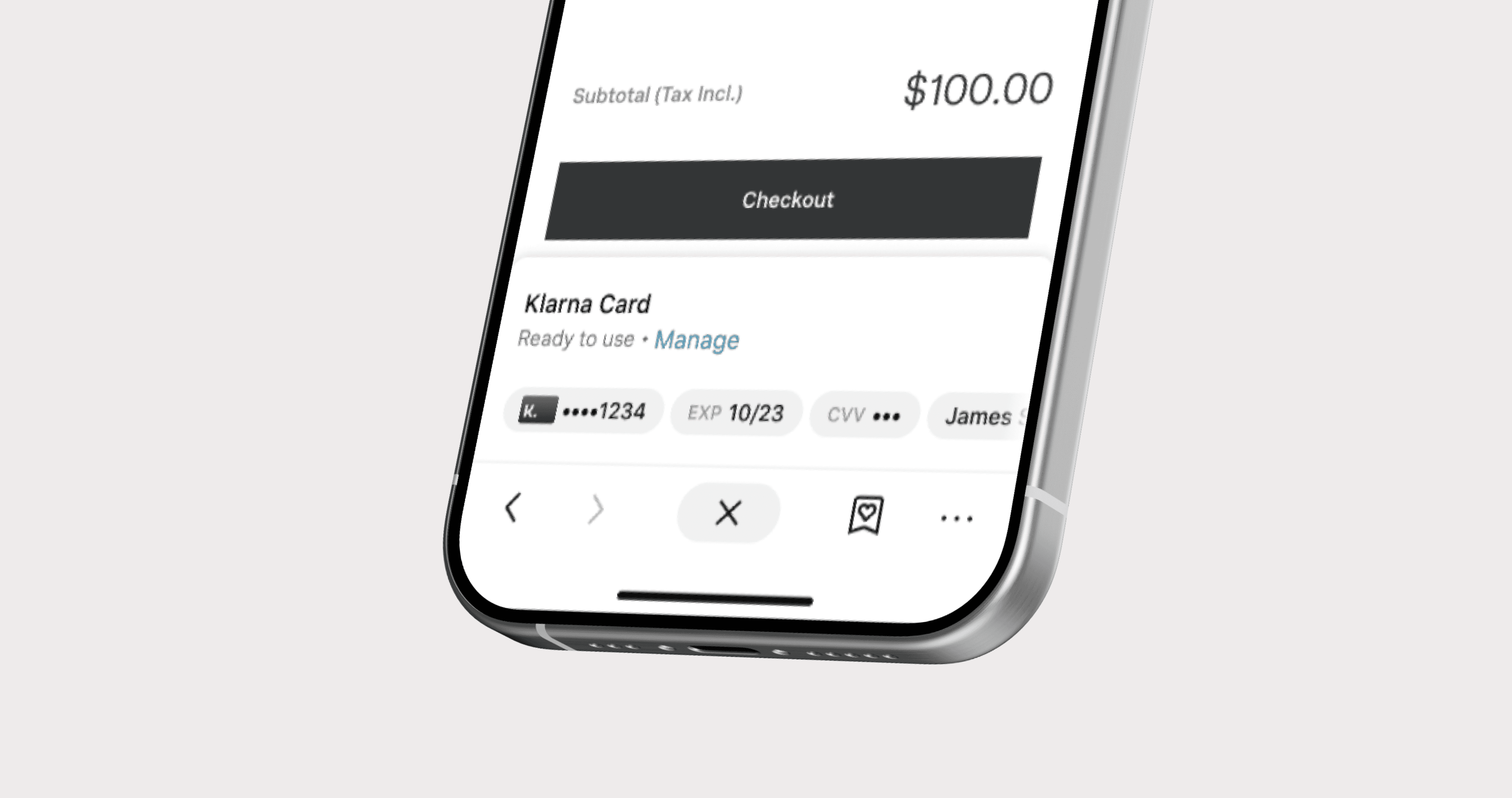
Seamless card application
With one action, payment information is detected and filled into checkout fields. No repeated card creation. No manual input.
Simple by design
Every interaction was reduced to its essential steps. The experience focused on clarity, speed, and control — removing friction without removing transparency.
The result was not just a new card, but a streamlined payment system embedded directly into how people already shop.
This project was a deep dive into the psychology of payments. It reinforced a core principle I design by: when you reduce friction thoughtfully, you don’t just simplify a task, you strengthen user confidence.
By aligning the product’s behavior with the user’s shopping habits, we created a roadmap for a payment layer that was flexible, secure, and above all, human-centric.