
Hello.
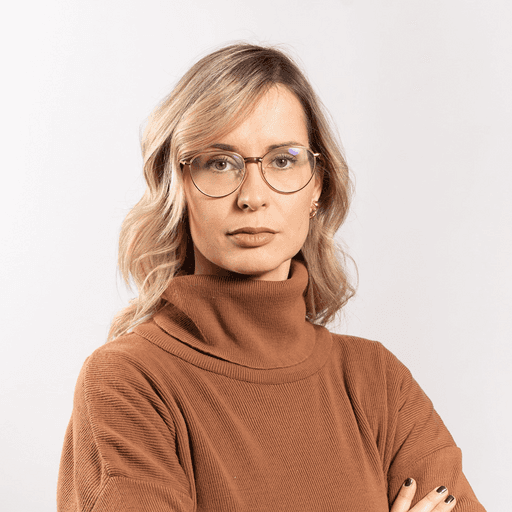
I'm a Staff Product Designer focused on solving the right problem. My job is turning hard problems into simple, lasting solutions.
About Me
About Me
I’m a designer who genuinely enjoys the 'messy middle' of a project. I specialize in taking those huge, complicated problems that keep stakeholders up at night and turning them into designs that just...work.
I enjoy digging into research to uncover real friction, crafting high-fidelity prototypes, and obsessing over the details.
I love collaborating with teams who care as much as I do about building things that are as functionally solid as they are beautiful. At the end of the day, I don’t just design interfaces; I spend as much time in strategy conversations as I do in Figma. For me, the design only works if the thinking behind it is right.
Staff Product Designer
Qonto
2023 - Present
Senior Product Designer
Klarna
2021 - 2022
Product Designer
Docebo
2019 - 2021
Senior Product Designer
XP
2018 - 2019
UI Designer
Fjord
2016 - 2018
Digital Art assistent
F/Nazca Saatchi & Saatchi
2013 - 2016
Digital Art assistent
FCB Brasil
2012 - 2013
Staff Product Designer
Qonto
2023 - Present
Senior Product Designer
Klarna
2021 - 2022
Product Designer
Docebo
2019 - 2021
Senior Product Designer
XP
2018 - 2019
UI Designer
Fjord
2016 - 2018
Digital Art assistent
F/Nazca Saatchi & Saatchi
2013 - 2016
Digital Art assistent
FCB Brasil
2012 - 2013
My learnings
My learnings
01
Craft isn't enough on its own
Obsessing over execution quality is what brought me to this work. Then I became a Product Designer and learned that strong craft applied to the wrong problem is just expensive polish. Sometimes the best design decision is to kill the feature, fix the root cause with a small improvement, or simply say no. It saves time, saves money, and spares users from something they never needed.
01
Craft isn't enough on its own
Obsessing over execution quality is what brought me to this work. Then I became a Product Designer and learned that strong craft applied to the wrong problem is just expensive polish. Sometimes the best design decision is to kill the feature, fix the root cause with a small improvement, or simply say no. It saves time, saves money, and spares users from something they never needed.
01
Craft isn't enough on its own
Obsessing over execution quality is what brought me to this work. Then I became a Product Designer and learned that strong craft applied to the wrong problem is just expensive polish. Sometimes the best design decision is to kill the feature, fix the root cause with a small improvement, or simply say no. It saves time, saves money, and spares users from something they never needed.
02
Components are part of the solution
A design system built in isolation from features is a design system built in isolation from users. Every component should earn its place by solving a real problem. The best systems I've worked on were built in close collaboration between DS and feature designers from the start and every time a feature exposed a gap, we treated it as an opportunity to strengthen the system, not work around it.
02
Components are part of the solution
A design system built in isolation from features is a design system built in isolation from users. Every component should earn its place by solving a real problem. The best systems I've worked on were built in close collaboration between DS and feature designers from the start and every time a feature exposed a gap, we treated it as an opportunity to strengthen the system, not work around it.
02
Components are part of the solution
A design system built in isolation from features is a design system built in isolation from users. Every component should earn its place by solving a real problem. The best systems I've worked on were built in close collaboration between DS and feature designers from the start and every time a feature exposed a gap, we treated it as an opportunity to strengthen the system, not work around it.
03
Where does my work begin
Most briefs I receive are solutions with the problem quietly removed. "We need a notification centre." "Add a dashboard." "Build an onboarding flow." The problem has already been decided, just disguised as a requirement. I've lost count of how many times a project arrived already wearing the name of a solution looking for a designer to execute it. The most valuable thing I do before start working is unwrap that solution back to its actual problem. That's where the real design work begins, and where most designers never go.
03
Where does my work begin
Most briefs I receive are solutions with the problem quietly removed. "We need a notification centre." "Add a dashboard." "Build an onboarding flow." The problem has already been decided, just disguised as a requirement. I've lost count of how many times a project arrived already wearing the name of a solution looking for a designer to execute it. The most valuable thing I do before start working is unwrap that solution back to its actual problem. That's where the real design work begins, and where most designers never go.
03
Where does my work begin
Most briefs I receive are solutions with the problem quietly removed. "We need a notification centre." "Add a dashboard." "Build an onboarding flow." The problem has already been decided, just disguised as a requirement. I've lost count of how many times a project arrived already wearing the name of a solution looking for a designer to execute it. The most valuable thing I do before start working is unwrap that solution back to its actual problem. That's where the real design work begins, and where most designers never go.
04
The human side of artificial inteligence
As a Product Designer I had moments of excitement about what AI can do, but then a question always shows up, and I can’t shake it: where is the human in all this intelligence? Because when AI enters a product, it changes how people feel about themselves. Will they feel understood or overwhelmed? Empowered or confused? In control or just quietly nudged along? AI can suggest. It can predict. It can automate. But my job is to make sure that intelligence feels human, built on trust, transpaency, and a genuine understanding of the person on the other side of the screen.
04
The human side of artificial inteligence
As a Product Designer I had moments of excitement about what AI can do, but then a question always shows up, and I can’t shake it: where is the human in all this intelligence? Because when AI enters a product, it changes how people feel about themselves. Will they feel understood or overwhelmed? Empowered or confused? In control or just quietly nudged along? AI can suggest. It can predict. It can automate. But my job is to make sure that intelligence feels human, built on trust, transpaency, and a genuine understanding of the person on the other side of the screen.
04
The human side of artificial inteligence
As a Product Designer I had moments of excitement about what AI can do, but then a question always shows up, and I can’t shake it: where is the human in all this intelligence? Because when AI enters a product, it changes how people feel about themselves. Will they feel understood or overwhelmed? Empowered or confused? In control or just quietly nudged along? AI can suggest. It can predict. It can automate. But my job is to make sure that intelligence feels human, built on trust, transpaency, and a genuine understanding of the person on the other side of the screen.
What People Say
What People Say
Danyelle is always one step ahead, approaching every project holistically and planning with clarity and intention. She asks the right questions, thinks through edge cases, and delivers detailed, well-considered design solutions. Working with her is seamless and inspiring.
Marija Stefanovic
Senior Product Designer
She is very customer-focused and brings a lot of clarity to our work. She fully owns the design during the Value Engineer phase, which makes our life as engineers much easier: we don’t have to guess about multiple states or design edge cases because she has already thought them through.

Lucas Cordeiro
Front end developer
Dany has an exceptional ability to understand complex problems and translate them into thoughtful, elegant design solutions that balance user needs, business goals, and technical constraints.

Vahrtich
Product Manager
Danyelle is always one step ahead, approaching every project holistically and planning with clarity and intention. She asks the right questions, thinks through edge cases, and delivers detailed, well-considered design solutions. Working with her is seamless and inspiring.
Marija Stefanovic
Senior Product Designer
She is very customer-focused and brings a lot of clarity to our work. She fully owns the design during the Value Engineer phase, which makes our life as engineers much easier: we don’t have to guess about multiple states or design edge cases because she has already thought them through.
Lucas Cordeiro
Front end developer
Dany has an exceptional ability to understand complex problems and translate them into thoughtful, elegant design solutions that balance user needs, business goals, and technical constraints.
Vahrtich
Product Manager
Danyelle is always one step ahead, approaching every project holistically and planning with clarity and intention. She asks the right questions, thinks through edge cases, and delivers detailed, well-considered design solutions. Working with her is seamless and inspiring.
Marija Stefanovic
Senior Product Designer
She is very customer-focused and brings a lot of clarity to our work. She fully owns the design during the Value Engineer phase, which makes our life as engineers much easier: we don’t have to guess about multiple states or design edge cases because she has already thought them through.
Lucas Cordeiro
Front end developer
Dany has an exceptional ability to understand complex problems and translate them into thoughtful, elegant design solutions that balance user needs, business goals, and technical constraints.
Vahrtich
Product Manager
Danyelle is always one step ahead, approaching every project holistically and planning with clarity and intention. She asks the right questions, thinks through edge cases, and delivers detailed, well-considered design solutions. Working with her is seamless and inspiring.
Marija Stefanovic
Senior Product Designer
She is very customer-focused and brings a lot of clarity to our work. She fully owns the design during the Value Engineer phase, which makes our life as engineers much easier: we don’t have to guess about multiple states or design edge cases because she has already thought them through.
Lucas Cordeiro
Front end developer
Dany has an exceptional ability to understand complex problems and translate them into thoughtful, elegant design solutions that balance user needs, business goals, and technical constraints.
Vahrtich
Product Manager
Danyelle is always one step ahead, approaching every project holistically and planning with clarity and intention. She asks the right questions, thinks through edge cases, and delivers detailed, well-considered design solutions. Working with her is seamless and inspiring.
Marija Stefanovic
Senior Product Designer
She is very customer-focused and brings a lot of clarity to our work. She fully owns the design during the Value Engineer phase, which makes our life as engineers much easier: we don’t have to guess about multiple states or design edge cases because she has already thought them through.
Lucas Cordeiro
Front end developer
Dany has an exceptional ability to understand complex problems and translate them into thoughtful, elegant design solutions that balance user needs, business goals, and technical constraints.
Vahrtich
Product Manager
Danyelle is always one step ahead, approaching every project holistically and planning with clarity and intention. She asks the right questions, thinks through edge cases, and delivers detailed, well-considered design solutions. Working with her is seamless and inspiring.
Marija Stefanovic
Senior Product Designer
She is very customer-focused and brings a lot of clarity to our work. She fully owns the design during the Value Engineer phase, which makes our life as engineers much easier: we don’t have to guess about multiple states or design edge cases because she has already thought them through.
Lucas Cordeiro
Front end developer
Dany has an exceptional ability to understand complex problems and translate them into thoughtful, elegant design solutions that balance user needs, business goals, and technical constraints.
Vahrtich
Product Manager
Danyelle is always one step ahead, approaching every project holistically and planning with clarity and intention. She asks the right questions, thinks through edge cases, and delivers detailed, well-considered design solutions. Working with her is seamless and inspiring.
Marija Stefanovic
Senior Product Designer
She is very customer-focused and brings a lot of clarity to our work. She fully owns the design during the Value Engineer phase, which makes our life as engineers much easier: we don’t have to guess about multiple states or design edge cases because she has already thought them through.
Lucas Cordeiro
Front end developer
Dany has an exceptional ability to understand complex problems and translate them into thoughtful, elegant design solutions that balance user needs, business goals, and technical constraints.
Vahrtich
Product Manager
Danyelle is always one step ahead, approaching every project holistically and planning with clarity and intention. She asks the right questions, thinks through edge cases, and delivers detailed, well-considered design solutions. Working with her is seamless and inspiring.
Marija Stefanovic
Senior Product Designer
She is very customer-focused and brings a lot of clarity to our work. She fully owns the design during the Value Engineer phase, which makes our life as engineers much easier: we don’t have to guess about multiple states or design edge cases because she has already thought them through.
Lucas Cordeiro
Front end developer
Dany has an exceptional ability to understand complex problems and translate them into thoughtful, elegant design solutions that balance user needs, business goals, and technical constraints.
Vahrtich
Product Manager
Danyelle is always one step ahead, approaching every project holistically and planning with clarity and intention. She asks the right questions, thinks through edge cases, and delivers detailed, well-considered design solutions. Working with her is seamless and inspiring.
Marija Stefanovic
Senior Product Designer
She is very customer-focused and brings a lot of clarity to our work. She fully owns the design during the Value Engineer phase, which makes our life as engineers much easier: we don’t have to guess about multiple states or design edge cases because she has already thought them through.
Lucas Cordeiro
Front end developer
Dany has an exceptional ability to understand complex problems and translate them into thoughtful, elegant design solutions that balance user needs, business goals, and technical constraints.
Vahrtich
Product Manager
Danyelle is always one step ahead, approaching every project holistically and planning with clarity and intention. She asks the right questions, thinks through edge cases, and delivers detailed, well-considered design solutions. Working with her is seamless and inspiring.
Marija Stefanovic
Senior Product Designer
She is very customer-focused and brings a lot of clarity to our work. She fully owns the design during the Value Engineer phase, which makes our life as engineers much easier: we don’t have to guess about multiple states or design edge cases because she has already thought them through.
Lucas Cordeiro
Front end developer
Dany has an exceptional ability to understand complex problems and translate them into thoughtful, elegant design solutions that balance user needs, business goals, and technical constraints.
Vahrtich
Product Manager
Danyelle is always one step ahead, approaching every project holistically and planning with clarity and intention. She asks the right questions, thinks through edge cases, and delivers detailed, well-considered design solutions. Working with her is seamless and inspiring.
Marija Stefanovic
Senior Product Designer
She is very customer-focused and brings a lot of clarity to our work. She fully owns the design during the Value Engineer phase, which makes our life as engineers much easier: we don’t have to guess about multiple states or design edge cases because she has already thought them through.
Lucas Cordeiro
Front end developer
Dany has an exceptional ability to understand complex problems and translate them into thoughtful, elegant design solutions that balance user needs, business goals, and technical constraints.
Vahrtich
Product Manager
Danyelle is always one step ahead, approaching every project holistically and planning with clarity and intention. She asks the right questions, thinks through edge cases, and delivers detailed, well-considered design solutions. Working with her is seamless and inspiring.
Marija Stefanovic
Senior Product Designer
She is very customer-focused and brings a lot of clarity to our work. She fully owns the design during the Value Engineer phase, which makes our life as engineers much easier: we don’t have to guess about multiple states or design edge cases because she has already thought them through.
Lucas Cordeiro
Front end developer
Dany has an exceptional ability to understand complex problems and translate them into thoughtful, elegant design solutions that balance user needs, business goals, and technical constraints.
Vahrtich
Product Manager